Why Won't My Horse Come To Me?
Why Won't My Horse Come to Me?
You stand at the gate and call your horse. They look at you, maybe even lift their head, and then turn around and walk away.
It's easy to take it personally. Why doesn't my horse want to be with me? Doesn't she trust me? Does he know I'm coming to get him? Or, perhaps most commonly: How do I make my horse come to me?
I think there is a more interesting question: Why would my horse choose to come to me?
We Usually Make the Answer Too Complicated
When a horse won't come, we often start looking for techniques. Change the way you call. Carry treats. Hide the halter. Walk away and see if they follow. Join up. Make yourself more interesting.
Some of these things may work. But they don't necessarily answer the question. If your horse comes because you've discovered the perfect trick, you may have taught them to come. You haven't necessarily learned why they didn't want to come before.
And I think that distinction matters.
What Happens When You Catch Them?
This is the first thing I'd look at. What usually happens after your horse comes to you?
Do you put on the halter and go to work? Ride? Leave their friends? Give medication? Bring them into a stall? Ask them to do something difficult?
Or does sometimes coming to you simply mean... nothing?
A horse is very capable of making associations. If every time you appear in the pasture, something they don't particularly enjoy follows, it isn't unreasonable for them to start reconsidering the invitation.
We might call that stubbornness. The horse might call it information.
What If They're Happy Where They Are?
This question gets overlooked.
Your horse may already be having a perfectly good day. They're grazing, spending time with their friends, lying in the sun, exploring, or simply doing nothing that requires human assistance.
And then you arrive.
You may be wonderful. But you're still asking them to leave something.
Why should they?
We sometimes assume that because we love spending time with our horses, they must automatically prefer our company to everything else. But horses have their own lives. They have friendships, preferences, routines, places they like to stand, and things they like to do.
A horse choosing to remain with the herd isn't necessarily rejecting you. They may simply be choosing what they want right now.
This Is Where Choice Gets Interesting
Imagine two horses.
The first lives alone in a small paddock with little to do. You walk through the gate, and immediately the horse comes over.
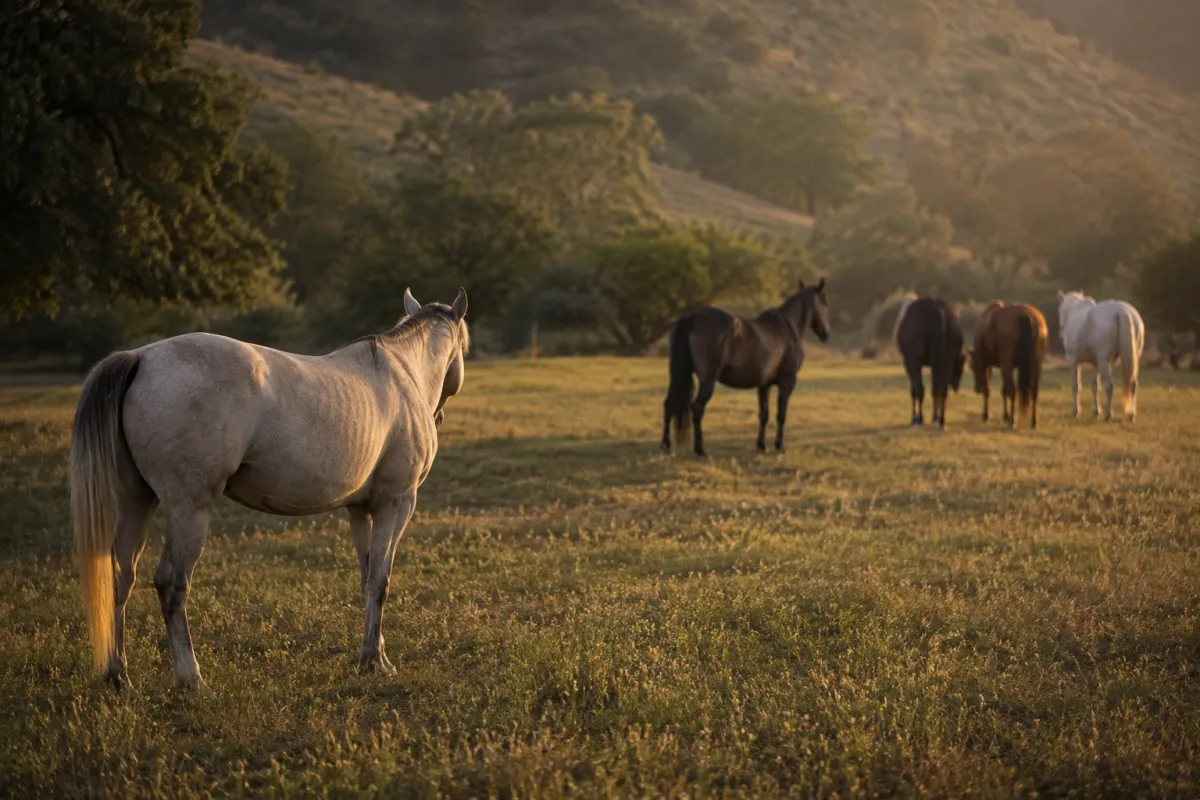
The second lives in a large pasture with several horses, plenty of space, interesting things to explore, and a rich social life. You walk through the pasture. The horse looks at you and eventually decides to leave the herd and come over.
Those two approaches may look identical. But they don't necessarily mean the same thing.
The second horse had somewhere else to be.
That's why I think freedom matters so much when we're trying to understand a horse's choices. A choice tells us more when there are real alternatives.
Don't Chase the Answer
If your horse walks away, my first instinct is not to follow. It's to watch.
Where are they going? What were they doing? What happened when I approached? Did they move away from me, or simply continue what they were already doing?
Those are different things.
And if they consistently leave when you enter their space, that's worth paying attention to. Not because you need to convince them to come back, but because they've given you information.
What If Your Horse Never Comes?
There may be practical reasons. They may not feel well. They may be uncomfortable being caught. They may associate humans with unpleasant experiences. They may be anxious. They may simply prefer the company of other horses.
And sometimes there may be a history between you that you need to understand.
If this is a sudden change in behavior, especially if your horse previously came willingly, I'd take that seriously and consider physical discomfort or other changes in their environment or routine.
But if this has always been the pattern, I'd be curious about the relationship rather than assuming the horse needs better training.
Maybe We Have the Question Backwards
Instead of asking, "How can I get my horse to come to me?" try asking, "What happens when my horse comes to me?"
And then ask, "What happens when they don't?"
Do they get chased? Punished? Cornered? Repeatedly asked? Or are they allowed to change their mind?
The answers may tell you much more than a training technique ever could.
I Want to Be Chosen
I don't want my horses to come to me because they've learned that resistance is pointless.
I want to create a relationship in which coming toward me is a reasonable choice. Sometimes that might mean making the interaction pleasant. Sometimes it might mean spending time together without asking anything. Sometimes it might mean changing what happens after they're caught.
And sometimes it might mean accepting that today, they'd rather stay with the herd.
That isn't necessarily failure. It may simply be an honest answer.
I'd rather have an honest answer than a trained performance.
Because the question I'm ultimately interested in isn't "Can I get my horse to come to me?"
It's "If my horse were completely free to choose, would they want to?"
That question is harder.
But it tells us something much more meaningful about the relationship.


