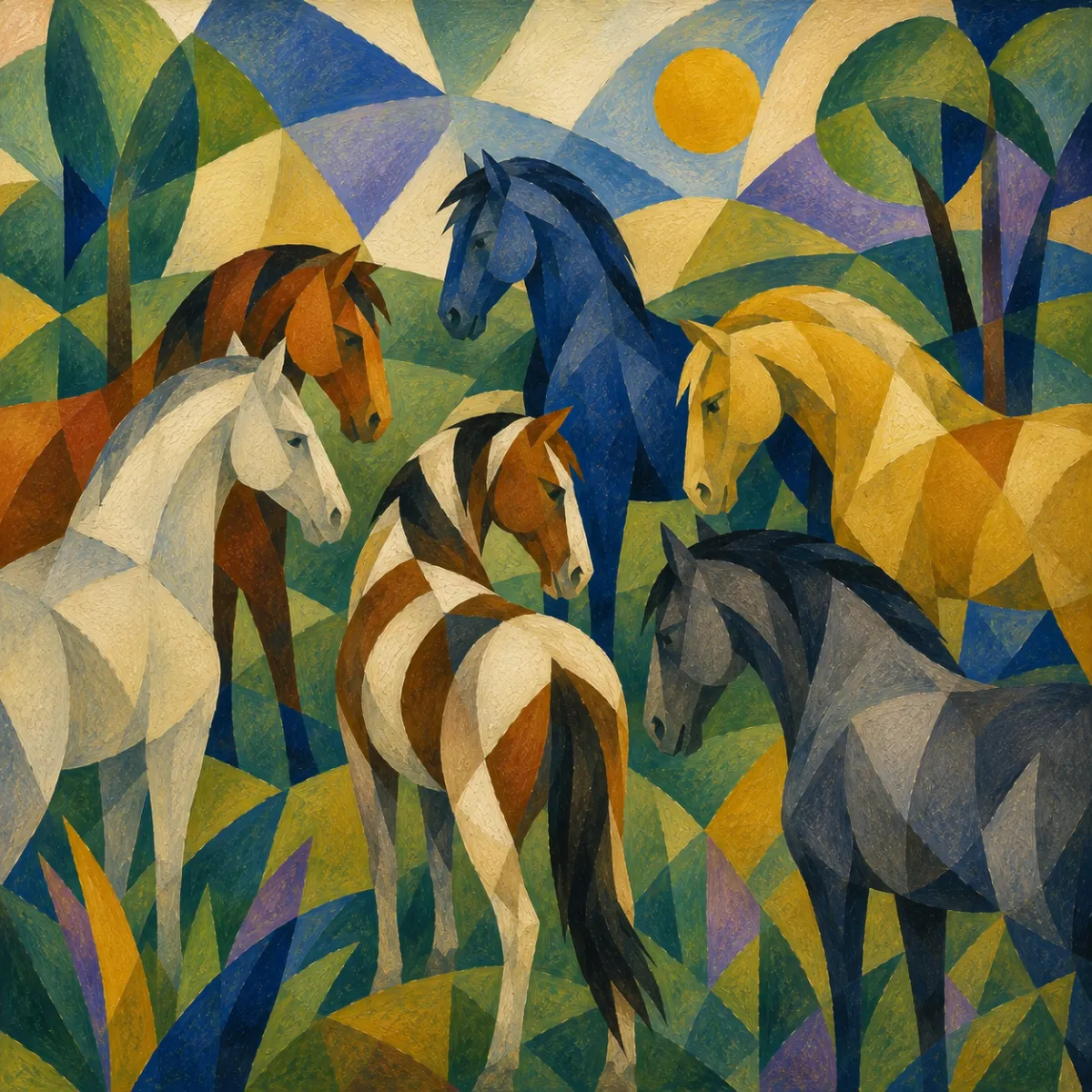
Why I Stopped Trying To Be The Leader
“What does this horse actually need from me right now — and am I willing to hear the answer, even if it's inconvenient?”
Why I Stopped Trying to Be the Leader
For years, "leadership" was the answer to everything.
Horse won't load in the trailer? You need to be a better leader. Horse is pushy at the gate? Establish leadership. Horse spooks, drags you toward the grass, ignores your cues, tests your boundaries? Leadership, leadership, leadership. It was the explanation for every problem and the prescription for every fix. I said it myself, more times than I can count. I believed it.
And then, somewhere along the way, I stopped.

Not because I decided horses don't need guidance, structure, or a human who knows what they're doing. They do. But because I started noticing what the word "leader" was actually doing in my hands — and in the hands of nearly everyone who used it the way I'd been taught to use it.
The word does a lot of quiet work
"Leadership" sounds benevolent. It sounds earned, relational, even loving — nothing like "dominance," a word most of us have rightly moved away from. But when I looked closely at what leadership actually asked of me in practice, it was doing the same job dominance used to do. It just came with better PR.
I was still the one deciding what happened next. I was still the one whose job it was to make the horse want to do what I'd already decided he was going to do. The horse's autonomy was still, quietly, off the table — it had just been repackaged as something the horse should choose to give up, because I'd "earned" it, because I was "worth following," because a good leader makes the horse feel safe enough to comply.
That's not consent. That's consent's costume.
What I noticed about myself
Once I started paying attention, I noticed how much of my energy in a session with a horse was going toward managing my own status. Am I being consistent enough? Assertive enough? Am I letting him get away with something? Every hesitation from the horse became a referendum on whether I was leader enough to deserve his cooperation.
That's an exhausting way to be with another living being. It's also, I came to think, a fairly self-centered one. The horse's behavior wasn't information about the horse anymore — it was a scoreboard for me.
When I let go of needing to be "the leader," something shifted. I could actually ask: why is he hesitating here? What does he need? What is he telling me? Instead of: what does his hesitation say about my authority?
What replaced it
I didn't replace leadership with permissiveness, and this is the part that gets lost in the debate every time. Letting go of the leader framework didn't mean letting go of structure, clarity, or my own judgment about safety. It meant relocating the center of the relationship. Instead of a hierarchy with me at the top making sure the horse stayed appropriately below me, I started building something closer to a negotiation — an ongoing conversation where the horse's "no" was actually allowed to mean something.
That's harder, honestly. It's much easier to have a rule ("I am the leader, therefore this happens") than to sit in the uncertainty of genuine two-way communication with an animal who can't use words. But it's also more honest about what's actually happening between us.
Why this makes people uncomfortable
I know this idea rattles people, and I understand why. Leadership language feels safe. It feels like it protects both horse and human — clear roles, clear expectations, less room for a 1,200-pound animal to make a dangerous unilateral decision. There's a real safety conversation buried in there, and I don't dismiss it.
But I'd push back gently: safety and hierarchy aren't the same thing. A horse who trusts that his signals will be heard is not a less safe horse to be around — often he's a far safer one, because he isn't spending his energy on behaviors born of frustration, confusion, or a nervous system that's learned nobody's listening.
The question I ask instead
I no longer ask, "How do I get this horse to see me as his leader?"
I ask, "What does this horse actually need from me right now — and am I willing to hear the answer, even if it's inconvenient?"
That question doesn't come with a script. It doesn't offer the tidy reassurance that "leadership" does. But it's put me in a truer relationship with every horse I've worked with since — and honestly, it's changed how I think about leading anything, horses included.
I'd love to know where this lands for you. Where does "leadership" still feel true to you, and where does it start to break down?
Other resources to help you get started with blogging
Start your own blog checklist:
Here is a quick checklist to get you started with you website blow. Remember imperfect action beats inaction, get started and keep publishing.
Create your blog page then add the blog element
Add the blog element to your page and select if you want compact or list view
Start planning your blog topics by Identifying what resonates with your audience. If you are stuck you can use sites like - https://answerthepublic.com/
Create an outline serves your company goals.
Write conversationally, like if you were telling a story to a friend
Pick a catchy title.
Use several media types (gif, short video, or image) to deliver your messages.
Use data to back up claims or ideas - make sure to cite all sources❗
Have a call to action and or give your audience something to walk away with.
Take 30 minutes to edit your post.


