What Does Autonomy Mean for Horses?
The word autonomy can sound strange when we apply it to horses. After all, horses live in a world we largely control. We decide where they live, what they eat, when the veterinarian comes, when the farrier arrives, and whether they are going to the trailer. We may own the land they live on and pay every bill associated with their care.
So what could it possibly mean to give a horse autonomy?
It doesn't mean pretending that horses can make every decision for themselves. It means asking a different question about the decisions we can give them.
Autonomy Isn't the Same as Freedom
I don't think autonomy means simply turning a horse loose and walking away. A horse can have acres of pasture and still have very little control over important parts of their life. Another horse might live in a smaller space but have meaningful choices about where to stand, when to move, who to spend time with, and whether to approach a person.
Autonomy isn't measured only in acres. It's measured, at least in part, by how many meaningful choices a horse has within the life we've created for them.
Can they move away? Can they approach? Can they say no? Can they choose companionship? Can they rest without being disturbed? Can they investigate something unfamiliar rather than immediately being made to interact with it? Can they communicate discomfort before that discomfort becomes a dangerous behavior?
These may seem like small things.
To a horse, they may not be small at all.
What Does "No" Mean?
This is probably where autonomy becomes most uncomfortable for us. We are accustomed to thinking that a horse's refusal is a training problem. The horse won't stand still, won't load, won't come out of the pasture, won't let us catch them, won't move forward, or won't accept being touched somewhere. Our instinct is often to ask how we can overcome the refusal.
But what if the first question were simply:
Why is the horse saying no?
That doesn't mean the answer will always be, "Then we shouldn't do it." Sometimes something genuinely needs to happen. A horse may need veterinary treatment. A trailer may be necessary in an emergency. A hoof may need attention. There are circumstances in which we have responsibilities that cannot simply be handed over to the horse.
But even then, the horse's communication matters. If we know the horse is frightened, can we reduce the fear? If something hurts, can we address the pain? If they don't understand, can we communicate more clearly? If they need space, can we give them some?
Autonomy doesn't eliminate our responsibilities.
It changes how we exercise them.
The Difference Between Compliance and Participation
A horse can stand perfectly still while being saddled. That doesn't necessarily mean they're comfortable. A horse can walk into a trailer. That doesn't necessarily mean they feel safe. A horse can stand quietly while being groomed. That doesn't necessarily mean they enjoy being touched.
From the outside, compliance can look exactly like cooperation.
But they're not the same thing.
A horse who has learned that resistance doesn't change anything may become very easy to handle. We might call that a good horse. But I think it's worth asking whether we've created cooperation, or simply stopped listening for the answer.
What Happens When the Horse Has a Choice?
This is one of the most revealing things you can observe. If your horse is free to leave, do they come closer? If they can choose where to stand, do they stand near you? If they can choose whether to interact, do they initiate contact? If they can walk away without being followed, do they eventually return?
These moments tell us something that forced behavior cannot.
A horse who stays because they have nowhere else to go is giving us very different information from a horse who stays when they could easily leave.
Choice makes behavior more meaningful.
Autonomy Doesn't Mean the Horse Gets Everything They Want
This distinction is important. I don't think respecting autonomy means allowing a horse to bite people, run through fences, refuse necessary medical care, or put themselves or others in danger. Horses, like humans, can make choices that aren't safe.
Our job isn't to remove every boundary. Our job is to ask whether every boundary actually needs to be there. And when one does, can we create it without unnecessary fear, force, or conflict?
There is a difference between saying, "You cannot do that because I need to control you," and saying, "I won't allow you to hurt yourself, but I'm going to listen carefully to why you're trying."
That difference matters.
What Does Autonomy Look Like in Everyday Life?
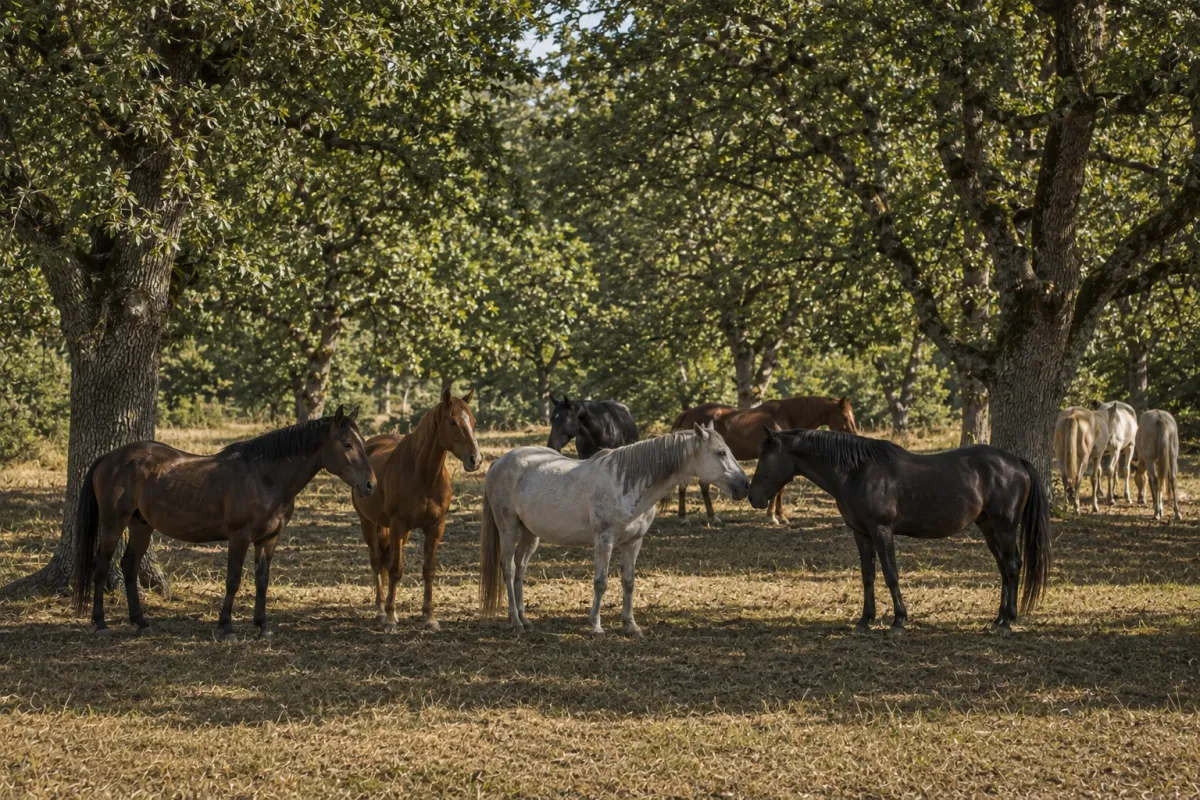
It might look surprisingly ordinary. A horse choosing to stand in the shade instead of the sun. Choosing which horse to groom with. Choosing to approach you in the pasture. Being allowed to walk away when an interaction is finished. Having enough space to move away from another horse. Having access to forage for much of the day rather than being restricted to a few meals. Having companionship. Being able to investigate a new object from a distance.
None of these things sounds revolutionary.
And perhaps that's the point.
Autonomy isn't necessarily a dramatic event. It's often a thousand small opportunities for a horse to have a say in their own life.
The Question I Keep Coming Back To
We often ask whether a horse trusts us. But perhaps we should sometimes ask something before that:
Does my horse have any reason to believe that what they say matters?
If a horse moves away and we follow, what have we taught them? If they say no and we make them anyway, what have we taught them? If they approach and we immediately put them to work, what have we taught them? And if they communicate discomfort and we change what we're doing, what have we taught them?
Perhaps autonomy begins there.
Not with giving a horse complete control. Not with abandoning boundaries. Not with refusing to train. But with recognizing that the horse is a participant in the relationship, not merely the recipient of our decisions.
Once you begin looking at horses this way, you start noticing how many choices are available to us that we simply never thought to offer.
Maybe the most important question isn't:
"How much freedom can I give my horse?"
Maybe it's:
"How much of my horse's life have I been deciding simply because I never thought to ask?"
Exploring Autonomous Horsemanship
If this way of thinking about horses is new to you, there is much more to explore. Autonomous Horsemanship is an approach built around giving horses more agency, paying closer attention to their communication, and questioning some of the assumptions we've inherited about training and partnership.
You don't have to agree with every idea to find something useful in it. You might simply begin by looking at your horse a little differently and asking a few more questions before deciding what they should do.
Because autonomy isn't a technique.
It's a way of looking at the horse.
And once you start looking, you may discover there are many more choices you can offer than you ever realized.


